
Impact Story
A Place in the Game: Building a Pathway in Australian Football
Australian rules football has come a long way in creating opportunities for athletes with an intellectual disability. What began with a meeting in Victoria in 1989 has grown into a national pathway, connecting local clubs, state representation and national competition. This is the story of how Sport Inclusion Australia has worked alongside the sport, its members and partners to help make that happen.
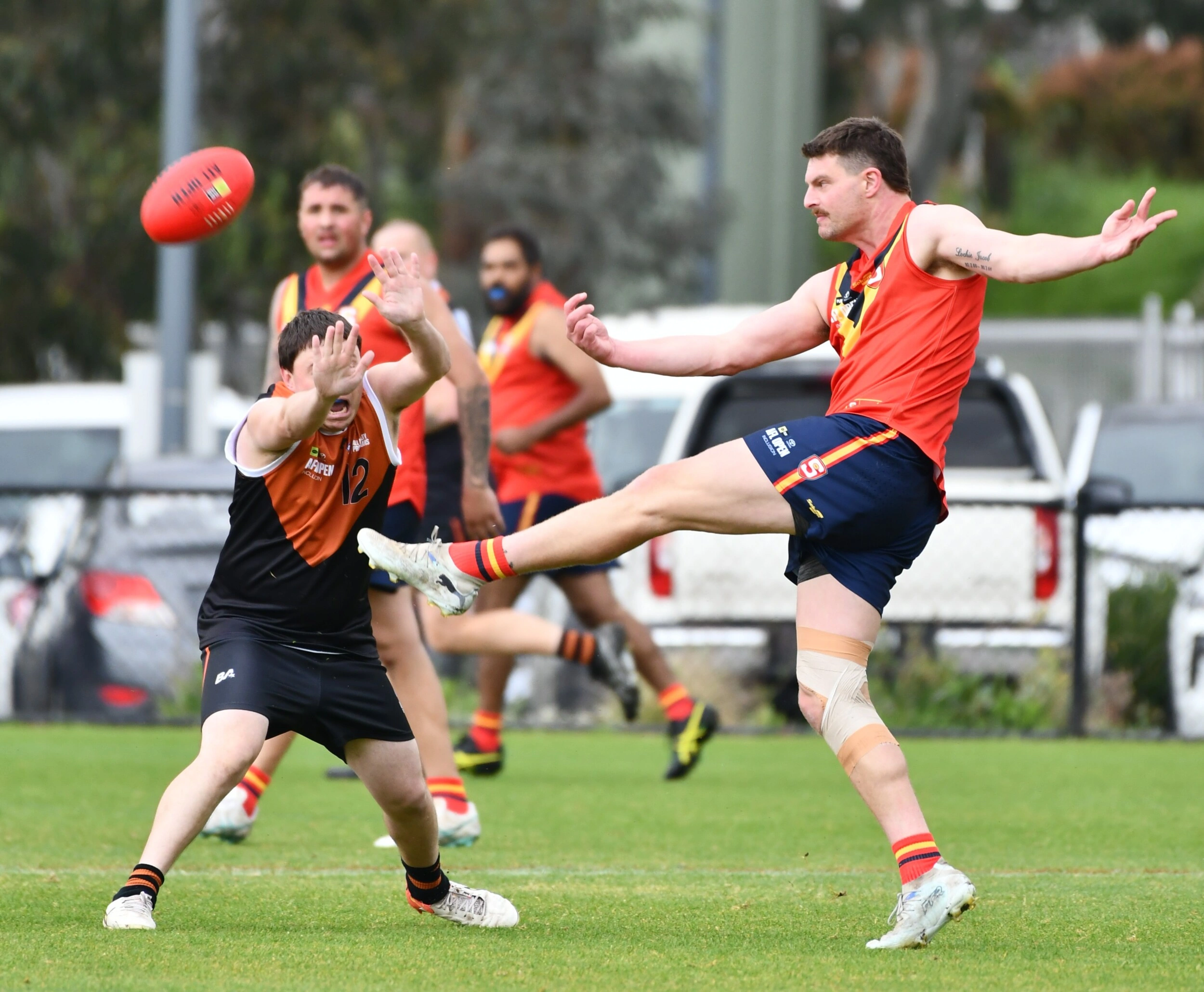
Few sports are as uniquely Australian as Australian rules football (AFL).
Born in Melbourne in the late 1850s, the game grew quickly through Victoria before spreading across the country. For generations of Australians, it has become part of how weekends are spent – playing, volunteering, supporting a local club or following a team.
By the late 1980s, the game was entering another period of change. The Victorian Football League was expanding beyond its Victorian roots and, in 1990, would become the Australian Football League, reflecting the increasingly national competition it was becoming.
At the same time, another conversation was beginning: how could Australians with an intellectual disability have a place in the game?
Creating somewhere to play
In 1989, Robyn Smith was CEO of VICSRAPID, the Victorian member organisation of AUSRAPID – now Sport Inclusion Australia.
VICSRAPID together with the Victorian Football League, Hawthorn Football Club, Hawthorn City Council and the Victorian Government met to explore how, together, they could create more opportunities for people with an intellectual disability to play Australian Rules Football.
It was an important time to have the Hawthorn Football Club at the table. The club was one of the biggest clubs in the sport, winning back-to-back premierships in 1988 & 1989.
The aim was to create an ongoing competitive opportunity for players with an intellectual disability. Some people with an intellectual disability were already playing football. What was missing was the structure around them: somewhere to play regularly, in an appropriate and fair competition with the chance for a pathway to grow.
Some of the key people involved in the early development of inclusive pathways included Chris Pelchen from Hawthorn Football Club, Paul Dunn from the Hawthorn City Council and Lenny Jenner from Sport and Recreation Victoria.
Two years later, in 1991, the Football Integration Development Association – FIDA – was established. Its purpose was clear: to provide people with an intellectual disability the opportunity to play competitive Australian Rules Football. Peter Ryan was elected President and was the driving force behind FIDA’s growth. VICSRAPID’s CEO Val Mackintosh was appointed Vice President and with AUSRAPID continued to support the growth both in Victoria and across Australia.
FIDA held its first official competitive season in 1991, with a small group of Victorian clubs and Chadstone Chargers winning the first Division 1 premiership.
Within a year the competition had expanded into two divisions, with Hawthorn Centrals taking the Division 1 premiership and Footscray Sunshine Underdogs winning Division 2.
State against State: Victoria vs South Australia
Victoria wasn’t the only place this work was happening.
In South Australia, Marie Little OAM was President of SASRAPID – another AUSRAPID state member – and was working with the South Australian Amateur Football League to create opportunities for players with an intellectual disability.
By 1994, Victoria and South Australia were playing interstate representative football. That year’s match was played at Football Park in Adelaide, where South Australia came out on top.
For the athletes involved, club football now had somewhere else to lead – state representation.
Growing the Game
Back in Victoria, FIDA continued to grow.
From 1993, the Victorian Amateur Football Association became an important supporter of the developing competition, providing FIDA with a base, helping promote the competition and supporting the provision of umpires. The relationship was formalised in 1995.
That same year, Bendigo became FIDA’s first regional club as the competition continued to expand beyond metropolitan Melbourne.
Over time, FIDA grew from a small number of teams into one of Australia’s most established dedicated football competitions for people with an intellectual disability.
But there was still another step to take.
Taking an Interstate Rivalry National
For years, Victoria and South Australia had provided the primary representative opportunity for footballers with an intellectual disability.
In 2013, that began to change. NSW joined the representative competition with South Australia, while Victoria entered separate Metro and Country teams.
A year later, the pathway took another big step, after lobbying by FIDA and AUSRAPID.
In 2014, the Australian Football League (AFL) hosted the inaugural National Inclusion Carnival, bringing together Victoria Metro, Victoria Country, South Australia, NSW/ACT, Queensland and Tasmania.
For the first time, the national representative competition for footballers with an intellectual disability was integrated within the AFL itself.
Western Australia joined the following year. By 2017, every Australian state and territory was represented for the first time.
Sport Inclusion Australia and its member organisations remained part of that growth and continues to work with FIDA across Victoria and with the AFL nationally.
AFL state bodies worked alongside Sport Inclusion Australia members to support the national carnival and develop local participation opportunities, while Sport Inclusion Australia continues to provide specialist knowledge around athletes with an intellectual disability and athlete eligibility.
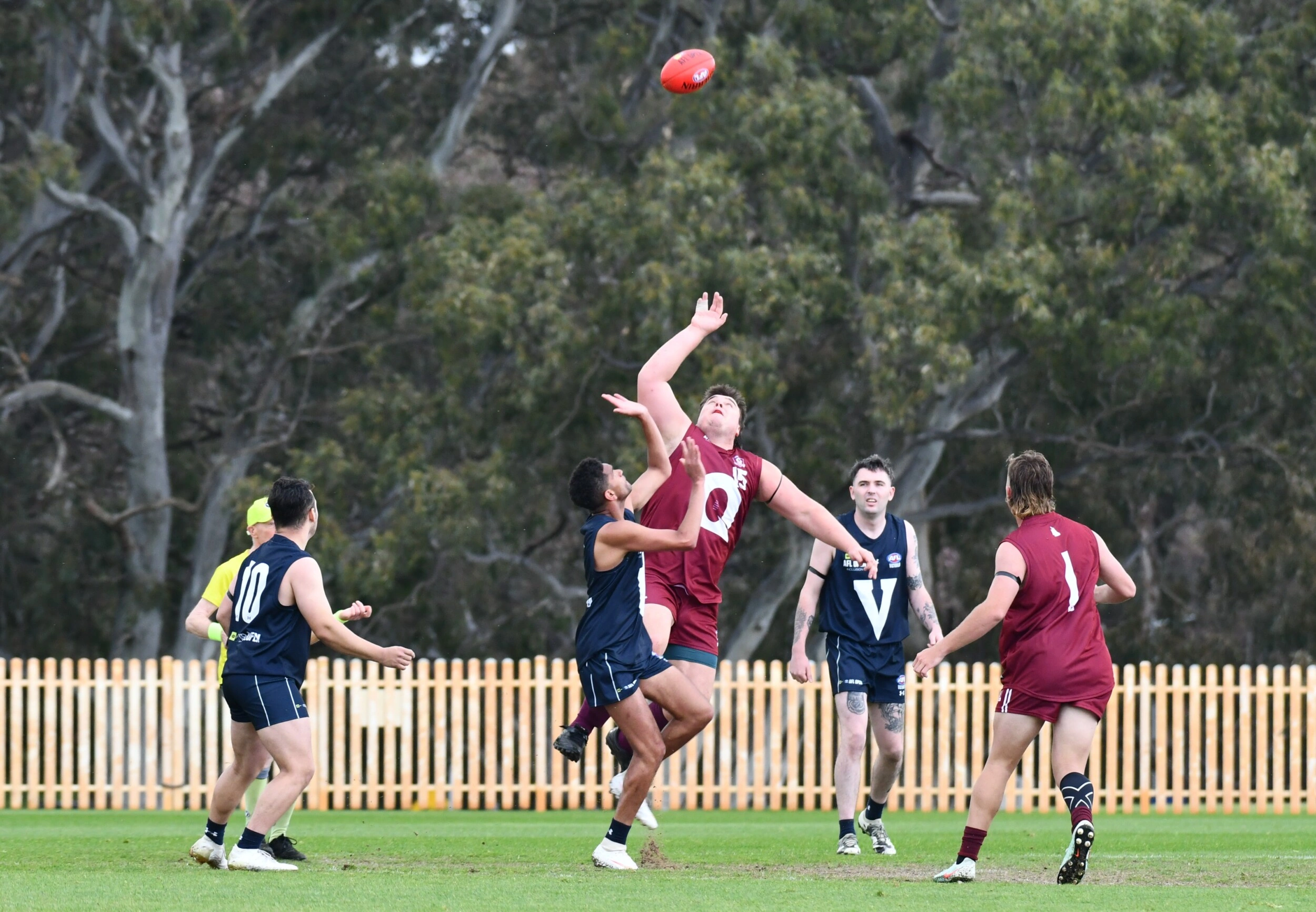
VIC vs QLD match at the 2026 Toyota AFL Open. Photographer: Michael Thomson.
From Australia to an International Stage
Australian Rules Football is uniquely Australian, which means there are few opportunities for its players to experience international competition.
In 2019, something different happened.
Brisbane hosted the 2019 INAS Global Games, delivered by Sport Inclusion Australia and bringing almost 1,000 elite athletes with an intellectual disability from nearly 50 countries together to compete.
Australian Rules Football joined the program as an exhibition sport. 26 players were selected and travelled to Brisbane, where they played two demonstration matches as part of the Games.
For players whose sport didn’t have an international championship pathway, it was an opportunity to be part of something much bigger.
They joined athletes from around the world, marched as part of an international sporting event and represented their sport on a global stage.
A pathway that Belongs Within Football
The National Inclusion Carnival has continued to evolve.
In 2024, the AFL brought its National Inclusion Carnival together with the national wheelchair football championships under a new flagship event: the Toyota AFL Open. The inaugural event also featured a women and girls Inclusion exhibition match.
The event continued to expand in 2025, adding a Blind and Low Vision exhibition match alongside the Inclusion and Wheelchair competitions.
And in 2026, women and girls with an intellectual disability competed in a dedicated Inclusion division for the first time, with every state and territory represented.
Today, athletes with an intellectual disability can play through established inclusion football competitions and progress to represent their state or territory on a national stage run by the AFL.
In Victoria alone, FIDA has grown to more than 1000 registered players across around 30 metropolitan and regional clubs.
It is a very different landscape from the one Sport Inclusion Australia, its members and their partners were working within in 1989.
And that is the point. The aim was to help build a sporting system where people with an intellectual disability could access the sport they loved, with pathways that could grow alongside the sport itself.
From VICSRAPID sitting down with the VFL, Hawthorn Football Club, local government and the Victorian Government, to FIDA’s first teams; from Victoria playing South Australia, to every state and territory taking the field – the pathway has been built step by step.
Nearly four decades later, the sport is still building on that work.
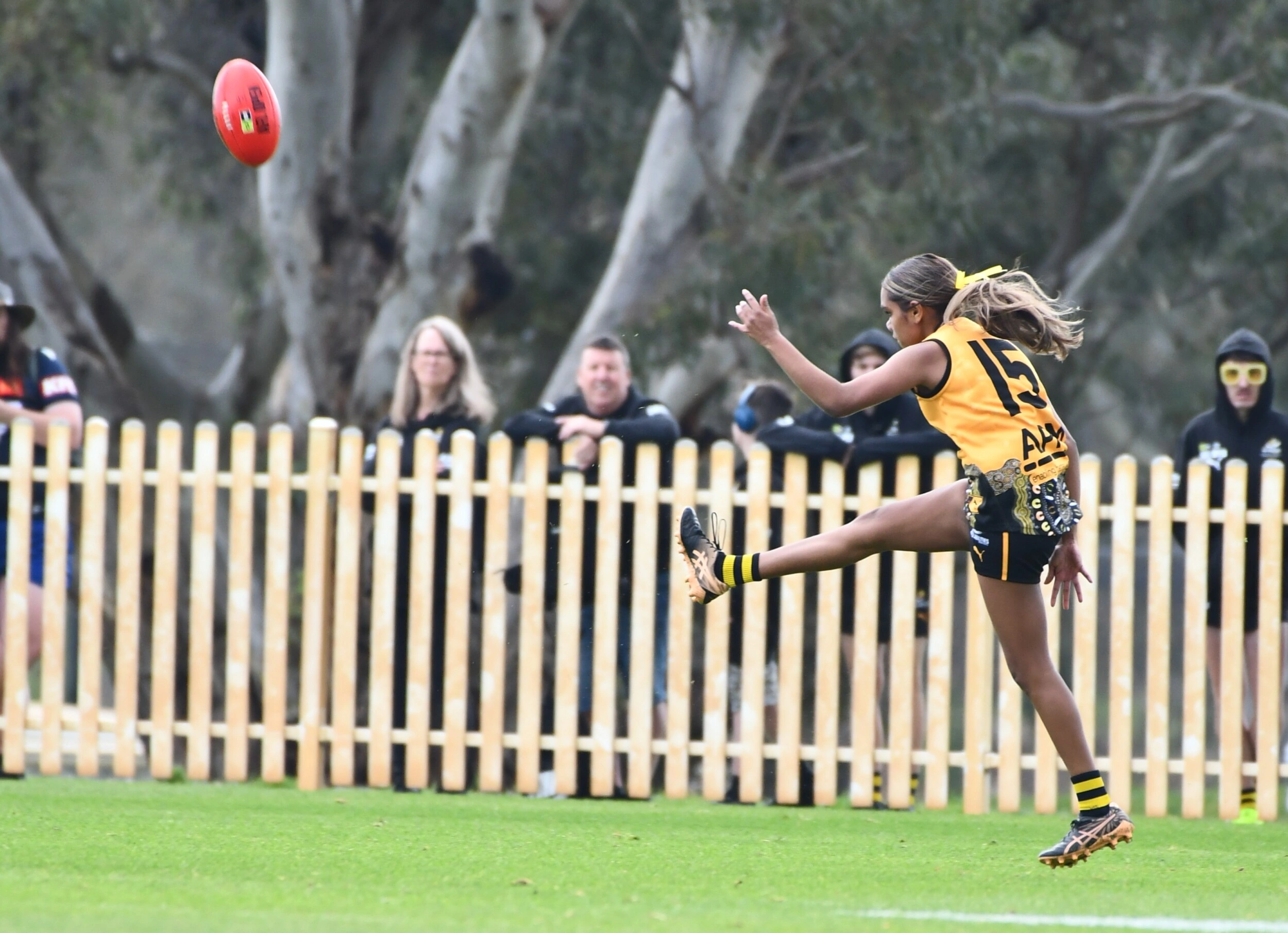
Player from the WA women’s team kicks the ball at the 2026 Toyota AFL Open. Photographer Michael Thomson.
Quick Links
Share this impact story
Supporting Champions
Every donation, big or small, makes a difference.
We believe the impact is more that the sport— it’s a lifelong path for inclusion, confidence, leadership and community.